Buying a Car Interstate? Everything You Need to Know Before You Arrange Transport
The Australian used car market has changed dramatically over the past decade. Thanks to online marketplaces, dealer websites and vehicle auction platforms, buyers are no longer limited to what's available in their local city. A buyer in Melbourne might find the perfect ute in Perth, someone in Brisbane could discover a rare sports car in Adelaide, while a family in Sydney might purchase a caravan from Tasmania.
Buying interstate opens up thousands of additional options. It can help buyers find better prices, lower kilometres, rare specifications, or simply the exact vehicle they've been searching for.
However, one important question remains after the purchase is complete:
How do you actually get the vehicle home?
Driving it across Australia isn't always the most practical—or economical—solution. Fuel costs, accommodation, annual leave, unexpected mechanical issues and thousands of kilometres of wear can quickly outweigh the perceived savings.
That's why interstate vehicle transport has become an increasingly popular option for Australian buyers.
Why More Australians Are Buying Vehicles Interstate
Years ago, buyers typically searched within their own city because travelling interstate simply wasn't practical.
Today, that's changed.
Modern online marketplaces allow buyers to compare thousands of listings from around Australia in minutes. Dealers also advertise nationally rather than locally, creating much greater competition.
Common reasons buyers shop interstate include:
- Better pricing
- Rare vehicle models
- Lower kilometre examples
- Better condition
- Limited edition vehicles
- Commercial vehicles unavailable locally
- Caravans and trailers with specialised features
For many buyers, paying for professional transport still results in a better overall deal.
Should You Drive It Home Yourself?
At first glance, driving home sounds like the cheaper option.
Unfortunately, the real costs often add up quickly.
Consider a trip from Perth to Sydney.
You'll likely need to budget for:
- Fuel
- Accommodation
- Meals
- Flights to collect the vehicle
- Time away from work
- Vehicle servicing afterwards
- Tyres
- Added depreciation
- Increased kilometres
There's also the possibility of breakdowns or discovering mechanical issues after purchase.
For newly purchased used vehicles, many buyers would rather avoid putting several thousand kilometres on the odometer immediately.
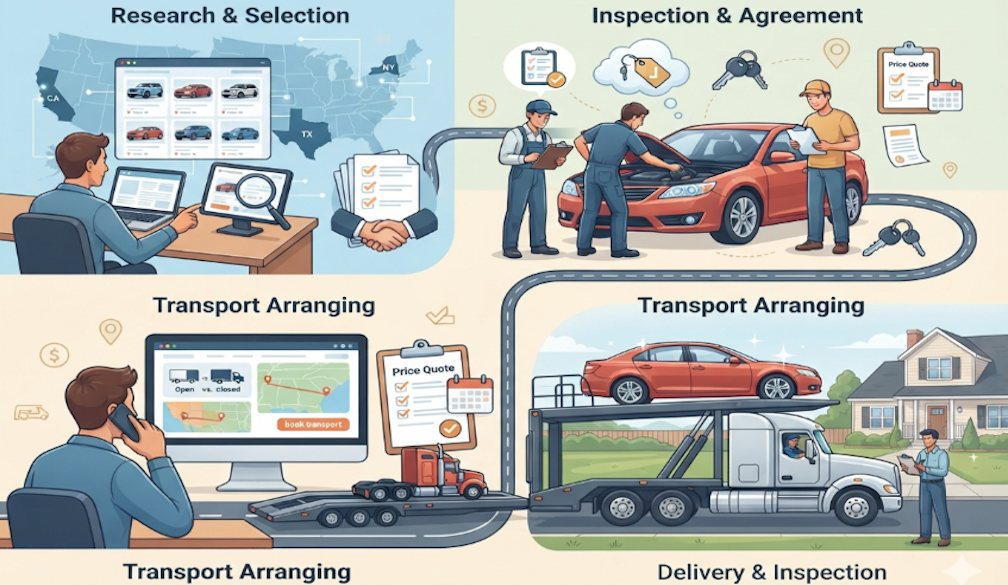
How Interstate Vehicle Transport Works
Professional vehicle transport is surprisingly straightforward.
The general process usually involves:
Booking
Once the purchase is confirmed, transport dates are arranged based on collection location and destination.
Vehicle Collection
The vehicle is collected from:
- Private sellers
- Dealerships
- Auctions
- Commercial yards
- Businesses
Inspection
Most transport companies perform a condition report before loading, documenting the vehicle's existing condition.
Secure Loading
Vehicles are carefully loaded onto purpose-built transport carriers using specialised equipment.
Delivery
The vehicle is transported to the agreed destination or depot for collection.
Throughout the journey, reputable transport providers coordinate scheduling and delivery updates.
What Affects Transport Costs?
There isn't one standard transport price.
Several factors influence the total cost.
Distance
Naturally, longer journeys cost more.
Vehicle Size
A compact hatchback is cheaper to move than a large American pickup or commercial truck.
Vehicle Condition
Non-running vehicles require additional equipment and labour.
Collection Location
Remote regional towns may involve additional transport compared to major metropolitan centres.
Delivery Requirements
Door-to-door services may differ in price compared to depot collection.
Seasonal Demand
Transport demand often increases around holidays, relocation periods and end-of-year sales.
Open Carrier vs Enclosed Transport
Most everyday vehicles travel safely on open vehicle carriers.
These transporters are the familiar multi-level trucks seen travelling Australian highways.
Open carriers offer:
- Cost-effective pricing
- Efficient transport
- High availability
- Suitable protection for most vehicles
Enclosed transport is generally reserved for:
- Luxury vehicles
- Classic cars
- Exotic vehicles
- Collectible cars
- High-value restorations
While enclosed transport costs more, it provides additional protection from road debris and weather.
Preparing Your Vehicle for Transport
A little preparation helps make transport smoother.
Most providers recommend:
- Removing personal belongings
- Taking photographs beforehand
- Leaving only minimal fuel
- Folding mirrors where appropriate
- Checking tyre pressure
- Disabling alarms if requested
- Removing toll tags if necessary
It's also wise to keep copies of purchase paperwork readily available.
What About Insurance?
Many buyers assume their own comprehensive insurance automatically covers transport.
This isn't always the case.
It's worth confirming:
- When your insurance begins
- Whether transport is covered
- What liability the transport company provide
- Whether additional transit insurance is recommended
Understanding the coverage before collection avoids unnecessary surprises.
Buying From Private Sellers
Interstate purchases from private sellers require additional planning.
Before organising transport, buyers should ideally:
- Verify ownership
- Confirm identification
- Obtain service history
- Review PPSR information
- Arrange an independent inspection if possible
- Finalise payment securely
Many buyers also organise mobile pre-purchase inspections before committing to the sale.
Dealer Purchases Can Simplify Transport
Buying from a dealership often makes interstate transport easier.
Dealerships regularly work with transport companies and are familiar with:
- Collection procedures
- Vehicle documentation
- Access times
- Loading requirements
This usually makes the handover process more efficient.
Timing Your Delivery
Transport isn't the same as express parcel delivery.
Vehicle carriers operate scheduled routes across Australia.
Delivery time depends on factors including:
- Collection location
- Destination
- Route scheduling
- Weather
- Regional access
- Loading availability
Planning ahead usually results in more flexible scheduling and smoother delivery.
Common Mistakes Buyers Make
Many first-time interstate buyers make similar mistakes.
These include:
Choosing Based Only on Price
The cheapest quote isn't always the best value.
Experience, communication and reliability matter just as much.
Forgetting Additional Costs
Transport is only one part of the purchase.
Buyers should also budget for:
- Registration transfers
- Stamp duty
- Insurance
- Roadworthy requirements
- State compliance where applicable
Not Inspecting the Vehicle
Photos don't always reveal everything.
Independent inspections provide valuable peace of mind before transport begins.
Leaving Booking Too Late
Popular transport routes can become busy during peak periods.
Booking early usually provides more scheduling flexibility.
Interstate Transport Isn't Just for Cars
Professional transport companies also move:
- SUVs
- 4WDs
- Utes
- Motorcycles
- Caravans
- Camper trailers
- Boats
- Commercial vehicles
- Machinery
- Prestige vehicles
This makes interstate transport useful for both personal buyers and businesses.
Choosing the Right Transport Provider
When comparing transport companies, look beyond price.
Important considerations include:
- Australia-wide coverage
- Experience transporting different vehicle types
- Transparent communication
- Flexible pickup options
- Positive customer reviews
- Clear insurance information
- Professional handling procedures
A reputable provider will explain the transport process clearly and answer questions before the vehicle is collected.
For Australians purchasing vehicles interstate, companies like Interstate Towing AU provide nationwide vehicle transport solutions that help buyers move cars, motorcycles, caravans, commercial vehicles and other transportable assets safely between Australian states. Rather than adding thousands of kilometres to a newly purchased vehicle, professional transport allows buyers to receive their purchase with less wear and considerably less stress.
Final Thoughts
Buying a vehicle interstate has never been easier. Australians now have access to a nationwide marketplace where the right car, caravan or commercial vehicle may be waiting hundreds—or even thousands—of kilometres away.
While the purchase itself is often completed online, planning how the vehicle will reach its new owner is just as important.
Professional interstate transport removes much of the uncertainty from the process, helping buyers avoid unnecessary travel, minimise wear on their new purchase and enjoy a more convenient delivery experience.
With careful research, realistic expectations and an experienced transport provider, buying interstate can significantly expand your options while remaining a practical and cost-effective way to find the right vehicle.
Frequently Asked Questions
Is it cheaper to transport a car interstate or drive it yourself?
It depends on the distance and your circumstances. Once fuel, accommodation, flights, meals, vehicle wear and time away from work are considered, professional transport is often more economical.
How long does interstate vehicle transport usually take?
Transit times vary depending on the pickup location, destination and transport schedule. Major city routes are generally faster than remote regional deliveries.
Can I leave personal belongings inside the vehicle?
Most transport companies recommend removing personal items, as they may not be covered during transit and can add unnecessary weight.
Do transport companies move non-running vehicles?
Yes. Many transport providers can arrange transport for non-operational vehicles, although specialised loading equipment may affect pricing.
Are motorcycles and caravans transported interstate, too?
Yes. Professional transport companies commonly move motorcycles, caravans, camper trailers, commercial vehicles and other specialised transport equipment alongside standard passenger vehicles.
What should I check before booking interstate transport?
Compare experience, insurance options, customer reviews, communication, collection procedures and overall service—not just the quoted price